
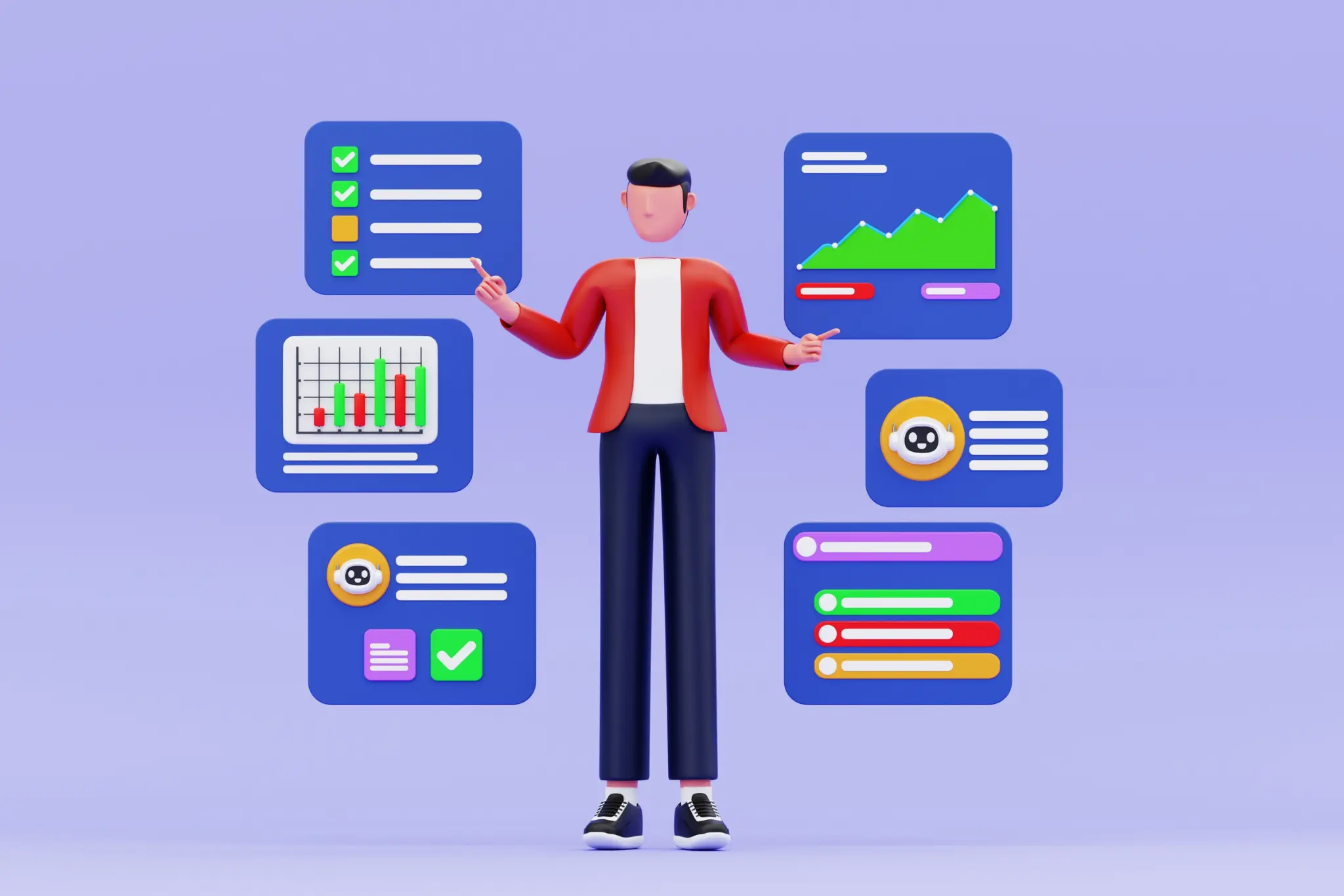
AI in marketing has moved past the hype phase into something more useful and more practical: a set of tools that genuinely save time on specific tasks, paired with a growing list of things teams have learned not to hand over completely. This AI in marketing guide covers where AI actually earns its place in a marketing workflow in 2026, from content creation and campaign analysis to AI marketing tools and chatbots, and where a person still needs to be the one making the call.
Whether you’re exploring how to use AI in marketing, evaluating AI tools, or building an AI marketing strategy, the goal is the same: use AI where it creates real value without handing over judgment, accuracy, privacy, or accountability.
Where AI Is Actually Earning Its Keep in Marketing
Looking at how marketers are using AI right now, first-draft content and campaign data analysis are the two areas with the most genuine, lasting adoption — not because AI replaced the work, but because it removed the blank-page friction and the manual spreadsheet-scanning that used to eat up so much time. Comparing AI content tools honestly matters here too, since they’re not interchangeable — some are stronger at long-form drafting, others at quick variations, and picking the wrong one for the task wastes more time than it saves.
Ad targeting and optimization is another area where AI has made a real, measurable difference, mostly by processing far more signal than a person could manually track across campaigns — though it still performs best with a clear strategy behind it, not as a replacement for one.

Building a Workflow That Actually Holds Up
An AI-assisted content workflow works best when it’s designed deliberately — which stages AI handles, which stages a person owns, and where the handoff between them happens — rather than being improvised tool by tool as new options show up. Comparing the top AI marketing tools on a recurring basis is worth doing too, since the landscape shifts fast enough that a tool stack chosen a year ago may no longer be the best available option today.
AI chatbots deserve their own mention here, since they’re one of the most visible AI applications in marketing right now — genuinely useful for qualifying leads and answering repetitive questions, but only when their scope is deliberately narrow and the handoff to a human is designed with real care.
How to Use AI in Marketing Effectively
Knowing how to use AI in marketing effectively is less about using AI everywhere and more about identifying the tasks where it can genuinely improve speed, consistency, or analysis. A practical workflow usually looks like this:
- Identify repetitive tasks: Find work such as research, first drafts, data analysis, reporting, or content variations that can be assisted by AI.
- Choose the right AI marketing tools: Match each tool to a specific task instead of building a large tool stack without a clear purpose.
- Set human review points: Decide where a marketer needs to check accuracy, tone, brand alignment, and context.
- Measure the results: Track whether AI is actually saving time, improving performance, or reducing repetitive work.
- Keep improving the workflow: Review what works and adjust your process as tools and marketing platforms evolve.
AI in Marketing: Know the Limits, Too
AI overviews are reshaping search behavior in ways that touch marketing well beyond just content creation, and it’s worth understanding how that shift affects visibility before building a strategy that assumes search still works exactly the way it used to. Ethical questions haven’t gone away either — from disclosure expectations to the risk of publishing confidently wrong information, and teams that get burned once tend to build in a verification step for good after that.
Data privacy is the other piece that’s easy to overlook in the rush to adopt new tools — feeding customer data into an AI platform carries real obligations, and it’s worth understanding what a given tool actually does with that data before it becomes part of the regular workflow. Marketers should also review applicable privacy requirements and the data-handling practices of the AI tools they use.
Frequently Asked Questions About AI in Marketing
What is AI in marketing?
AI in marketing refers to using artificial intelligence to assist with tasks such as content creation, customer analysis, campaign optimization, personalization, and customer service.
How can marketers use AI?
Marketers can use AI for research, content ideation, first drafts, data analysis, campaign optimization, audience insights, personalization, and customer support.
What are AI marketing tools?
AI marketing tools are software applications that use artificial intelligence to assist with marketing tasks such as content creation, analytics, automation, customer engagement, and campaign optimization.
What is an AI marketing strategy?
An AI marketing strategy defines how a business uses artificial intelligence to improve specific marketing processes while maintaining human oversight, accuracy, brand consistency, and accountability.
Is AI replacing marketers?
AI is more useful as a marketing assistant than as a complete replacement for marketers. Human judgment remains important for strategy, creativity, context, ethics, accuracy, and decision-making.
Put It Together
The realistic picture of AI in marketing right now is less dramatic than the early hype promised, and more useful because of it. AI is a genuinely strong collaborator for speed, analysis, and volume, but it isn’t a replacement for judgment, taste, or accountability.
The most effective approach is to build an AI marketing strategy around specific business goals, choose the right tools for the job, and keep people involved wherever accuracy, context, privacy, or important decisions are involved.
If you’re looking for a practical AI in marketing guide, start with the core principles covered here and then explore the cluster guides linked throughout this page for deeper advice on individual applications.