Every founder with a fresh ad budget asks the same question: Google Ads vs Meta Ads—which should you use first? The honest answer is that it depends less on which platform is “better” and more on where your buyer already is in their decision process. Get that wrong and you’ll burn budget testing the wrong channel before you ever learn whether your offer works. For the broader playbook, see our Paid Advertising & Growth: The Complete Guide.
Google Ads vs Meta Ads: Intent vs Interruption
Google Ads is an intent-based channel. Someone types “best project management software for agencies” because they’re already looking for a solution — your ad meets an existing need. Meta Ads is an interruption-based channel. Someone is scrolling their feed with no shopping intent, and your ad has to create desire out of nothing. Neither approach is superior; they solve different problems.
This is also the fundamental difference between PPC vs social ads: search advertising responds to existing intent, while social advertising often creates interest before a person actively searches for a solution.
| Factor | Google Ads | Meta Ads |
|---|---|---|
|
Primary role |
Capturing existing demand |
Generate and influence demand |
|
User intent |
Usually higher |
Usually lower initially |
|
Best for |
People actively searching |
Discovery and awareness |
|
Creative needs |
Moderate |
High |
|
Visual Products |
Helpful but not essential |
Often highly effective |
|
Keyword targeting |
Important |
Not the primary targeting method |
|
Buying cycle |
Often shorter |
Often longer |
|
Best starting point |
Existing search demand |
New or visual categories |
When Google Ads Should Come First
- Your product solves a problem people already search for by name
- You have a clear, well-defined keyword with decent search volume
- Your offer converts well on a landing page without much visual persuasion
- You need to validate demand quickly before investing in creative production
If people are actively Googling the problem you solve, that’s low-hanging fruit. Google Ads lets you buy your way to page one while your organic SEO catches up, and the traffic you attract already has some level of purchase intent baked in.
When Meta Ads Should Come First
- You’re selling something visual — physical products, design, lifestyle brands
- Your category doesn’t have obvious high-intent search terms yet
- You have (or can produce) strong creative: photos, video, UGC-style content
- You want to build awareness and retarget later, not just capture ready buyers
Meta rewards good creative more than almost any other paid channel. If you can produce scroll-stopping video or imagery, Meta can introduce your brand to people who didn’t know they wanted your product yet — something search advertising structurally can’t do. Meta also provides guidance on choosing campaign budgets and schedules through Meta Ads Manager.
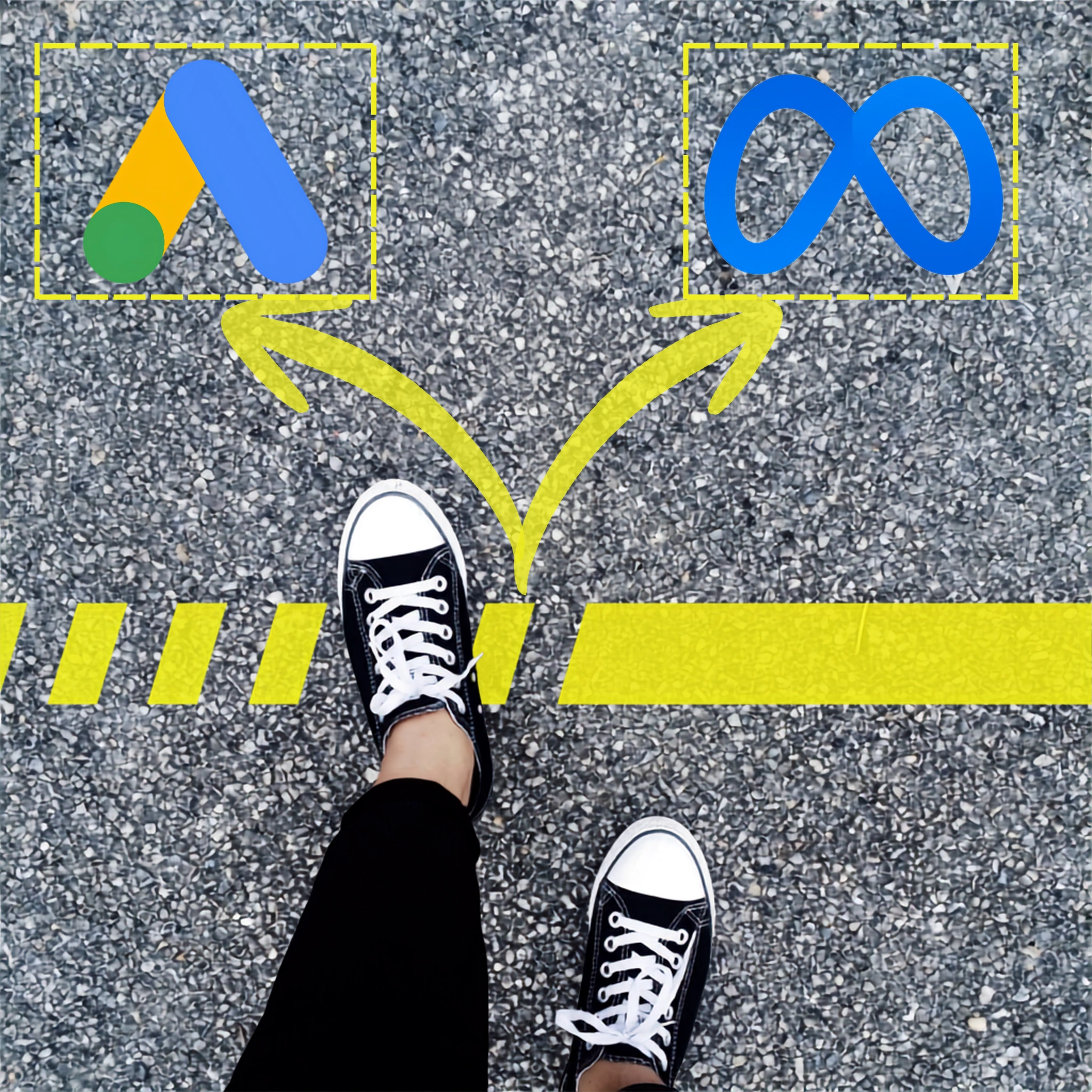
Advertising costs can vary significantly by industry, audience, competition, and campaign objective, so it’s worth checking current benchmarks before setting your budget. For Google Ads, you can use Google’s budget planning and cost estimator to explore industry-based estimates and understand how daily budgets and spending limits work.
Google Ads vs Meta Ads: Budget and Learning Curve
Google Ads tends to have a steeper cost-per-click for competitive keywords but a shorter learning curve for beginners — you’re mostly optimizing keywords, match types, and bids. Meta Ads often has a lower entry cost but a longer learning curve, since performance depends heavily on creative testing, audience structure, and giving the algorithm enough conversion data to optimize against, which usually means a slightly higher minimum budget to see reliable signal.
Google Ads vs Meta Ads for Small Business
For small businesses, the choice between Google Ads vs Meta Ads usually comes down to whether you’re capturing existing demand or creating new demand. Google Ads can be a strong starting point when customers already search for your product or service and are close to making a decision. Meta Ads may be a better fit when your business relies on visual content, brand discovery, or reaching people who are not actively searching yet.
If your budget is limited, avoid splitting it equally across both platforms from day one. Start with the channel that best matches your customers’ current buying behavior, collect conversion data, and expand once you have a repeatable acquisition process.
A Practical Way to Decide
If you’re unsure which ad platform to start with, ask one question: does a meaningful number of people already search for what I sell? If yes, start with Google Ads to capture that existing demand cheaply while you build creative assets for Meta. If no — if you’re creating a category or selling something people discover rather than search for — start with Meta and let search advertising follow once you’ve built enough brand awareness that people start searching for you by name.
Factor in Attribution and Sales Cycle Length
Longer, higher-consideration sales cycles tend to favor starting with Meta or another awareness channel, since you need multiple touchpoints before someone converts and a single Google click at the moment of search may not capture the full journey. Shorter, more transactional purchases tend to favor Google Ads, since the gap between search intent and purchase decision is much smaller. Whichever you choose first, set up conversion tracking properly from day one — without it, you’ll end up guessing at which channel actually deserves the credit once you’re running both.
You Don't Have to Choose Forever
This isn’t a permanent decision — most mature paid acquisition strategies eventually run both. The real goal early on is avoiding split focus and a split budget before you’ve proven either channel works for your offer. Pick the one that matches your buyer’s behavior today, get it profitable, and then expand.
Frequently Asked Questions
Is Google Ads better than Meta Ads?
Neither platform is universally better. Google Ads is generally stronger for capturing existing search demand, while Meta Ads is often better for discovery, awareness, and visually driven products. The right choice depends on your audience, offer, sales cycle, and available creative resources.
Should a small business start with Google Ads or Meta Ads?
A small business should usually start with the platform that best matches how customers discover its products or services. If people actively search for the solution, Google Ads can be a strong starting point. If the product is visual or discovery-driven, Meta Ads may be more suitable.
Is Google Ads more expensive than Meta Ads?
Not necessarily. Advertising costs vary by industry, audience, competition, campaign objective, and market. Google Ads can have higher CPCs for competitive keywords, while Meta Ads may require more creative testing before you find a profitable combination.
Can I run Google Ads and Meta Ads at the same time?
Yes. However, businesses with limited budgets may benefit from testing one platform first. Once you understand your offer, audience, conversion rate, and customer acquisition costs, you can expand to the second platform.
Which is better for lead generation: Google Ads or Meta Ads?
Both can generate leads. Google Ads can be particularly effective when prospects are actively searching for a solution, while Meta Ads can help businesses generate demand and reach potential customers earlier in the buying journey.
Final Takeaway
There is no universal winner in the Google Ads vs Meta Ads debate. Google Ads is usually the better starting point when customers are actively searching for your solution, while Meta Ads can be the stronger choice when you need to create demand, build awareness, or sell a visual product.
Start with the platform that matches your customer’s behavior, give it enough budget and time to generate meaningful data, and focus on profitable conversions rather than clicks alone. Once you’ve proven your offer and acquisition process, you can layer in the second platform and build a more diversified paid advertising strategy.